6th Edition of
Chemistry World Conference
June 18-20, 2026 | Barcelona, Spain
High Performance Liquid Chromatography (HPLC)
High Performance Liquid Chromatography (HPLC) operates by pumping a liquid sample through a chromatographic column packed with a stationary phase, typically consisting of small porous particles. The sample components are separated based on differences in their affinity for the stationary phase and the mobile phase, which is typically a liquid solvent or a mixture of solvents. HPLC offers high resolution, sensitivity, and versatility, making it suitable for analyzing a wide range of compounds, including small molecules, biomolecules, pharmaceuticals, and natural products. Different modes of HPLC, such as reverse-phase, normal-phase, ion-exchange, and size-exclusion chromatography, allow for the separation of diverse analytes with varying polarities, charges, and sizes. HPLC can be coupled with various detectors, including UV-Vis, fluorescence, mass spectrometry, and refractive index detectors, to enable detection and quantification of separated analytes. HPLC is widely used in pharmaceuticals, environmental analysis, food and beverage, clinical diagnostics, and research laboratories for quality control, process monitoring, and research purposes. Continuous advancements in column technology, instrumentation, and data analysis software improve the efficiency, sensitivity, and speed of HPLC analysis, further expanding its applications in diverse scientific disciplines.
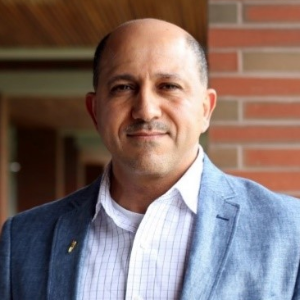
Hossam A Gabbar
Ontario Tech University, Canada
Victor John Law
University College Dublin, Ireland
Alexander Bagaturyants
National Research Nuclear University MEPhI, Russian Federation
Sergey Suchkov
N.D. Zelinskii Institute for Organic Chemistry of the Russian Academy of Sciences, Russian Federation
Shree Niwas Chaturvedi
Centre for Aptitude Analysis and Talent Search, India
Pieter Samyn
SIRRIS, Belgium
Susanne Naf Rudiger
Hamilton Bonaduz AG, SwitzerlandSubmit your abstract Today


Title : Advances in plasma-based radioactive waste treatment
Hossam A Gabbar, Ontario Tech University, Canada
Title : Unraveling the ultrastructure and functions of the neuronal membrane skeleton using super-resolution fluorescence microscopy
Zhou Ruobo, Djillali Liabes University of Sidi Bel Abbes, Algeria
Title : Solar box cooker dehydration, and relative humidity endpoint detection, of lamiaceae culinary leaves on the island of Crete
Victor John Law, University College Dublin, Ireland
Title : Nutrient and heavy metal loads from the Ribeiras to Coastal zones: A land-ocean continuum perspective in Madeira Island
Aracelis Del Carmen Narayan Rajnauth, University of Porto, Portugal
Title : Prospective polyoxometalate-based covalent organic framework heterogeneous catalysts
Arash Ebrahimi, Comenius University Bratislava, Slovenia
Title : Eliminating implant failure in humans with nano chemistry: 30,000 cases and counting
Thomas J Webster, Brown University, United States